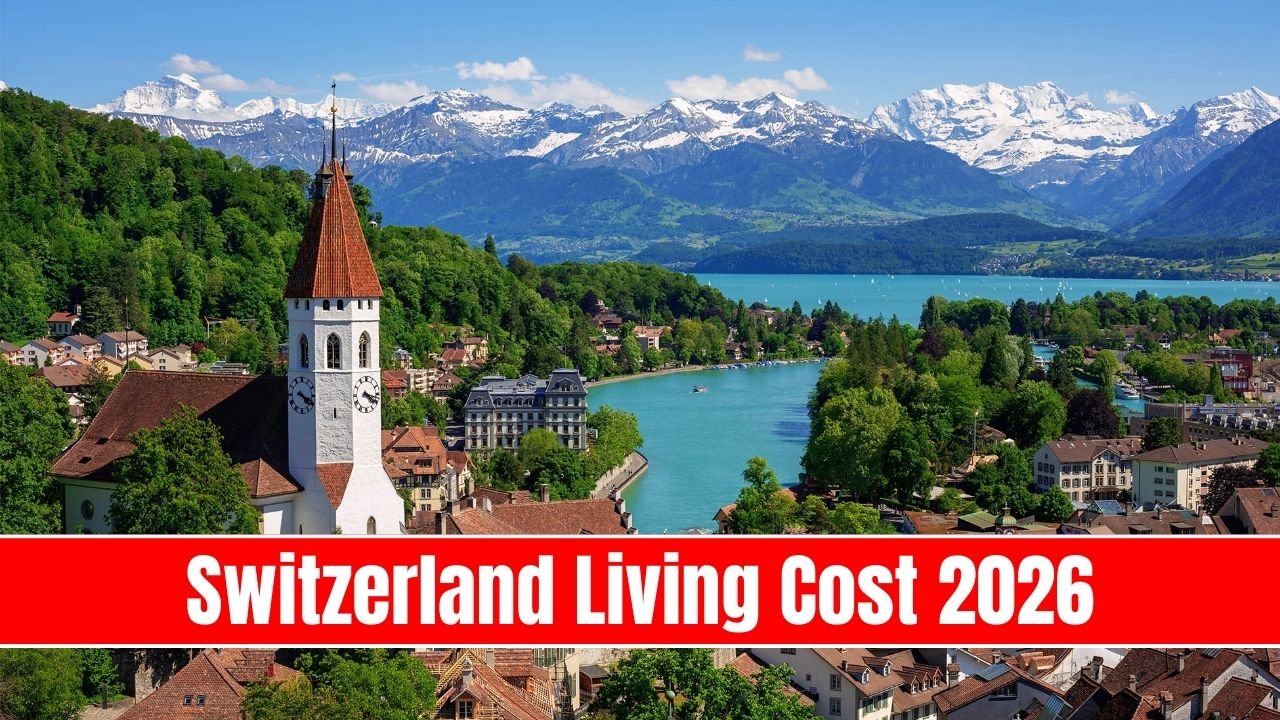
Switzerland Living Cost 2026: People believe that Switzerland has high prices yet no one provides actual cost information. I will present actual statistics which show all important categories for this current year. This reference guide helps both new expats who recently arrived and long-term residents who need clear information about Swiss living. My name is Charlene and I use this channel to share my banking and finance knowledge which I acquired during my 10 years of experience at no cost. People who want to learn about Swiss living and money management should click the like button and subscribe to our channel.
Housing
For most people, housing is the single biggest expense. In Zurich or Geneva, a one-bedroom, or what locals call a 2.5-room apartment, typically costs between CHF 2,000 to 2,500 per month. Two-bedroom apartments usually range from CHF 3,000 to 4,000. In Winterthur or Lausanne, you can find one-bedroom apartments which cost between CHF 1,500 and 2,000. You need to pay a deposit which equals two to three months of rent before you move in so you must have CHF 4,000 to 6,000 available before starting your move. The housing market in Zurich and Geneva cities operates under landlord control because there exists a greater demand than available housing options.
Homeowners need to allocate their budget for three financial responsibilities which include their mortgage payments and interest costs and the Eigenmietwert expense which serves as a virtual rent tax for their property. The current situation remains active until the point of complete disappearance. The housing expenses which my partner and I face total approximately CHF 30,000 each year when we combine the Eigenmietwert and interest and amortization and maintenance fees and all other financial obligations. People who own property must take their ownership responsibilities seriously because they need to establish their complete annual expenses to achieve financial security during their time in Switzerland.
Taxes
The Swiss tax system presents difficulties because newcomers to the country lack complete understanding of its complicated structure. Different tax rates apply according to cantonal and communal boundaries and the taxpayer’s marital status and permit classification. In Zurich expats who hold B permits must pay taxes through tax at source when their annual income falls below CHF 120000. The deduction process operates automatically, establishing a range that starts at 15% and reaches 35% based on both income and geographic area. French-speaking regions generally charge higher prices than German-speaking regions which makes Zug and Schwyz more affordable than Zurich. Your choice of residence affects your financial situation but it also determines your preferred way of life.
The income tax for a single person earning CHF 150000 in Zurich will range between 20 percent and 30 percent which results in annual tax payments of CHF 30000 to CHF 45000. The Swiss wealth tax requires payment between CHF 1000 and CHF 4000 for every million of assets throughout the year according to the regulations of each canton and commune. The progressive tax system enables taxpayers to reduce their expenses through effective tax planning. The combination of social deductions with pension contributions creates an effective financial management system.
Social Deductions
Social contributions begin deducting from your earnings before you receive your first salary payment. Pillar 1 covers state contributions like AHV, IV, and ALV, totaling around 7% of gross salary. The occupational pension (BVG) which forms Pillar 2 requires monthly deductions that might reach CHF 1000 based on both your current age and salary level. The combination of Pillar 1 and 2 takes between 10 percent and 20 percent of gross salary.
The option to join Pillar 3 exists as an optional pathway which experts recommend you to follow. You can contribute up to CHF 7,258 per year, and it is tax-deductible. The money you invest will create wealth that will stay with you throughout your life. The process of optimizing these assets will create a major boost for both your financial stability and your planning activities for upcoming events.
Utilities and Insurance
Utilities can surprise newcomers because they don’t know what to expect. One person needs to pay between CHF 200 and 400 per month to access electricity and water and internet and mobile services. Internet costs CHF 40 to 80 and mobile plans are often CHF 20 to 50 if you compare options.
Switzerland requires all residents to have health insurance coverage. In 2026, expect to pay CHF 350 to 500 per adult per month. This expense falls entirely on you because employers do not pay for it. Many expats also choose supplemental plans for gym, massages, or health checks which cost between CHF 1,000 and 4,000 for annual coverage. You need to create an insurance budget because it helps you deal with unexpected expenses.
Food and Transportation
Dining away from home costs a lot of money. The cost of weekday lunches starts at CHF 20 and goes up to CHF 30 while dinner prices reach between CHF 50 and CHF 80 for each person. Coffee on the way to work costs between CHF 5 and 6. The total grocery expense for two people amounts to CHF 1,000 per month because they spend about CHF 100 per visit.
Cross-border shopping near Germany or France can cut this cost to CHF 200 to 300 per month. Public transport provides excellent service throughout Switzerland. A Halbtax card costs CHF 185 per year and reduces travel costs by 50%. The expenses of car ownership include parking fees and insurance and road tax and fuel and seasonal tyre changes which typically cost several hundred francs monthly.
Miscellaneous Expenses
The monthly expenses for gym memberships and spas and clothing and haircuts and streaming services and weekend activities total between CHF 300 and 500. The cost of haircuts ranges between CHF 60 and CHF 80 but some expats choose to use different methods. The correct approach to budgeting requires you to create a budget that reflects your actual spending needs because this method helps you maintain control over your finances until month-end.
The Full Picture
A single professional living in Zurich needs to pay CHF 2000 for rent and CHF 400 for health insurance and CHF 200 for utilities and CHF 800 for food and eating out and CHF 100 for transport and CHF 400 for miscellaneous expenses. The total monthly living expenses amount to approximately CHF 3900 which results in an annual cost of CHF 46800.
A person with a salary of CHF 150000 will face social deductions of approximately CHF 25000 and an income tax obligation of about CHF 30000. The yearly income after living expenses amounts to approximately CHF 48000 which results in a monthly income of CHF 4000. People lack a financial strategy which leads them to waste their extra funds on unnecessary expenses instead of building their wealth.